
Our Hybrid Strategy for Flexible Endoscopes: Meeting Clinical and Sustainability Needs
For more than 40 years, reusable flexible endoscopes have been part of our portfolio, supporting significant advances in medicine and patient care. Flexible endoscopes are highly versatile and are used in a wide range of diagnostic and therapeutic applications. To meet the diverse needs of healthcare providers, we offer not only reusable endoscopes but also a selection of flexible single-use endoscopes. But why is a hybrid portfolio essential for meeting clinical requirements while also considering environmental impacts?

Commitment to innovation
Our hybrid strategy combines the proven reliability of reusable endoscopes with the specific advantages of single-use solutions—supporting effective clinical outcomes and the responsible use of resources. This balanced approach ensures that we not only build on established technologies but also continue to drive innovation and adapt to the evolving needs of our customers.
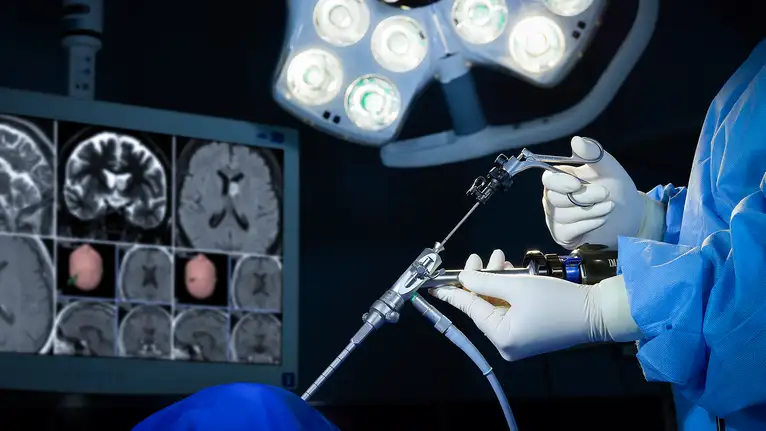
Whether single-use or reusable, the high quality of our products remains consistent. This allows healthcare partners to work with confidence, regardless of which option best suits their needs.
For patients at increased risk of infection, single-use endoscopes offer the advantage of significantly reducing the potential for cross-contamination. Reprocessing reusable endoscopes is a demanding process, but advanced sterilization methods and strict reprocessing protocols help ensure that these devices meet rigorous safety standards. By offering both single-use and reusable solutions, healthcare providers can select the most appropriate option for different clinical situations while maintaining high standards of patient safety.
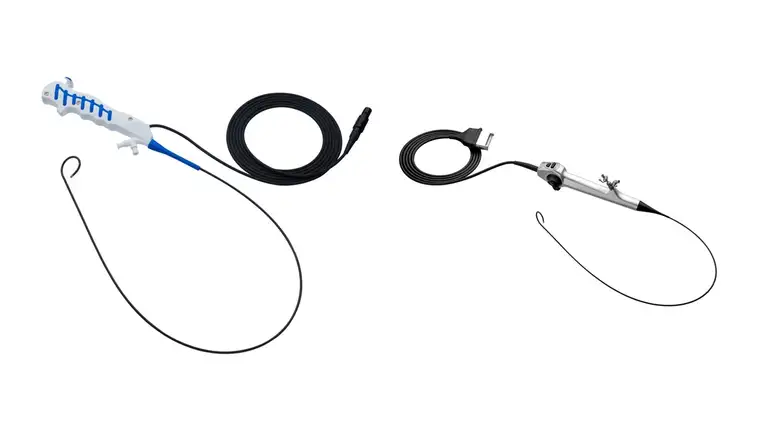
The environmental impact of flexible endoscopes does not depend on the product alone. It is influenced by the broader context, including frequency of use, reprocessing requirements, transportation, material consumption, product lifespan, and repairability.
For this reason, broad statements such as "single-use is better" or "reusable is better" oversimplify a complex issue. Only by considering the specific use case can healthcare providers determine which solution is both clinically appropriate and environmentally advantageous.
Economic considerations are also important. While reusable endoscopes generally require a higher upfront investment, their longevity and lower cost per use can make them economically attractive when used frequently.
A model-based life cycle assessment was conducted for the FLEX-XC video ureterorenoscope and the FLEX XC-1. Under the defined assumptions, the analysis shows:
Reusable FLEX-XC
- One-time manufacturing and transportation impact at the beginning of the product lifecycle
- Approximately 1.1 kg CO₂e per reprocessing cycle¹
- Particularly advantageous when used regularly within established reprocessing workflows
Single-Use FLEX-XC1
- Approximately 5.5 kg CO₂e per procedure¹
- No reprocessing required
- Consistent device condition through replacement after each use
Under the defined model assumptions, the reusable system begins to deliver environmental advantages after only a few applications. The analysis indicates that the reusable system has a lower carbon footprint after six uses and lower material consumption after four uses compared with the single-use alternative. This advantage increases with each additional use.

Our strategy is based on providing choice. The optimal decision between reusable and single-use endoscopes depends on the specific clinical and operational circumstances at each healthcare facility.
Reusable endoscopes may be particularly suitable where:
- Case volumes are high or consistent
- Established reprocessing processes are in place
- Long-term use is expected
Single-use endoscopes may be particularly suitable where:
- Case volumes are lower
- Infection-control requirements are especially demanding
- Reprocessing infrastructure is limited
Our technology enables both reusable and single-use endoscopes to be integrated into the same imaging platform. This provides healthcare partners with a modular solution that offers flexibility while maintaining system compatibility
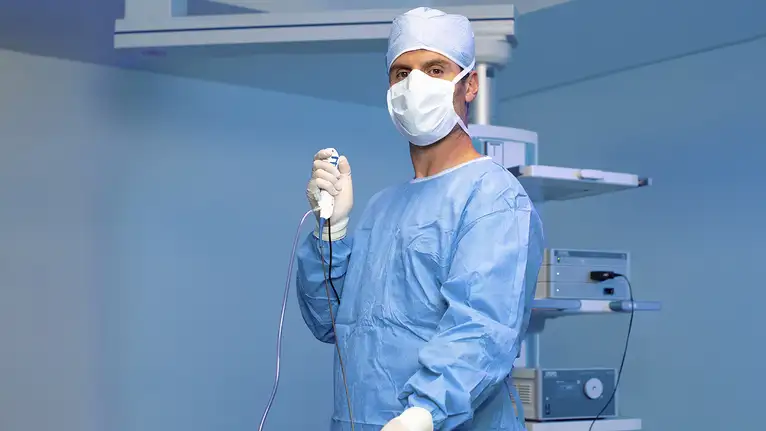
Our life cycle assessments provide a robust basis for informed decision-making. They help identify which factors influence environmental impact and demonstrate how strongly outcomes depend on the assumptions used.
Key influencing factors include:
- Number of uses
- Reprocessing processes
- Transport routes
- Material consumption
- Packaging
- Repairs and product lifespan
This transparency makes it possible to evaluate different scenarios and select the most appropriate solution based on context rather than general assumptions.
Through our hybrid strategy, we support healthcare partners in considering clinical requirements, operational realities, and sustainability aspects holistically:
- Informed decision-making based on our own life cycle data
- Flexible solutions for different clinical requirements
- Greater transparency regarding environmental impacts
- Support for more sustainable process design
- Modular integration into compatible imaging systems
Reusable and single-use endoscopes are not opposing concepts—they are complementary solutions designed for different healthcare environments. The most appropriate choice depends on which option provides the greatest clinical and environmental benefit within a specific context of use.
Methodological Note
The figures presented are based on a model-based life cycle assessment conducted under defined assumptions. Actual environmental impacts may vary depending on patterns of use, reprocessing procedures, transportation, product lifespan, repair requirements, and other local factors. The results apply only to the specific context described and cannot be transferred to other products, applications, or healthcare settings without further evaluation.
1 The calculation follows a cradle-to-grave approach in accordance with DIN EN ISO 14067. To provide transparency regarding the scope of the assessment, system boundaries are defined using life cycle modules A–C. The assessment includes raw material extraction and processing (A1), upstream transportation (A2), manufacturing and packaging at the production site (A3), downstream distribution and logistics processes beyond the factory gate (A4), the use phase including cleaning, disinfection, and sterilization (B modules), and end-of-life disposal of both the product and its packaging (C modules).