Secondary Prevention of Cervical Cancer
Hysteroscopic Video-Endocervicoscopy
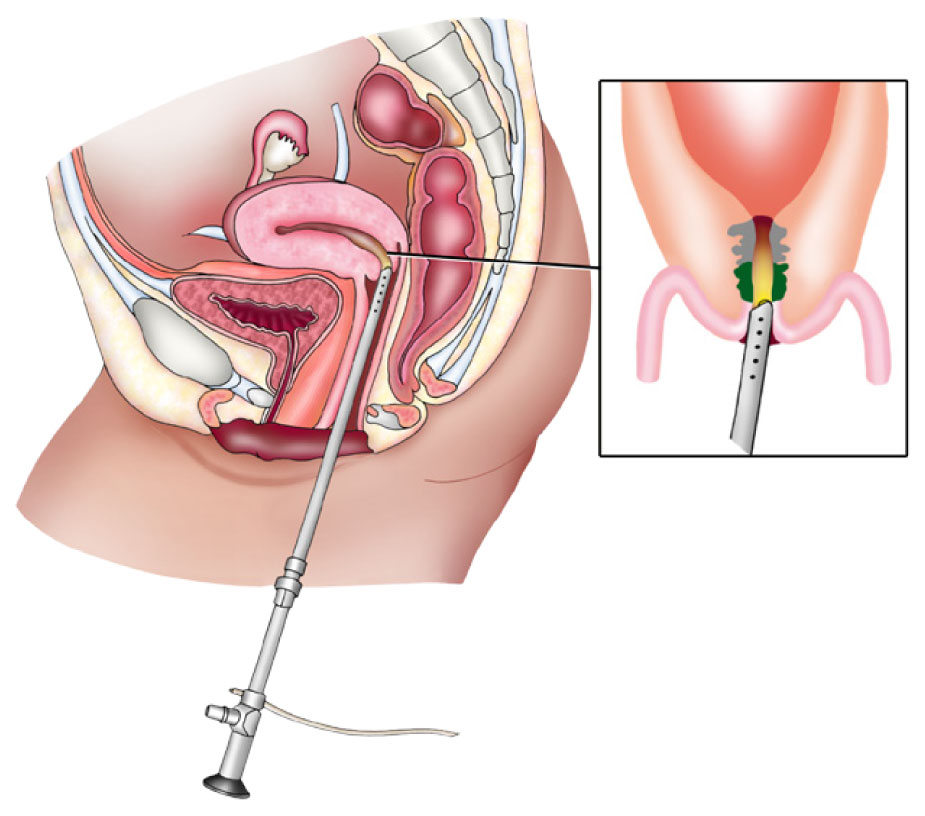
Hysteroscopic Video-Endocervicoscopy
Endocervicoscopy is useful for defining the location of the squamo-columnar junction.
Video-endocervicoscopy performed by office hysteroscopy requires no general or local anesthesia and allows the squamocolumnar junction to be identified in patients positively diagnosed with an endocervical lesion. Using a small-diameter hysteroscope, the horizontal exent of the lesion can be determined accurately. Application of this modality significantly contributes to a reduction in the rate of endocervical R1-resections in patients with cervical intraepithelial neoplasia and a